
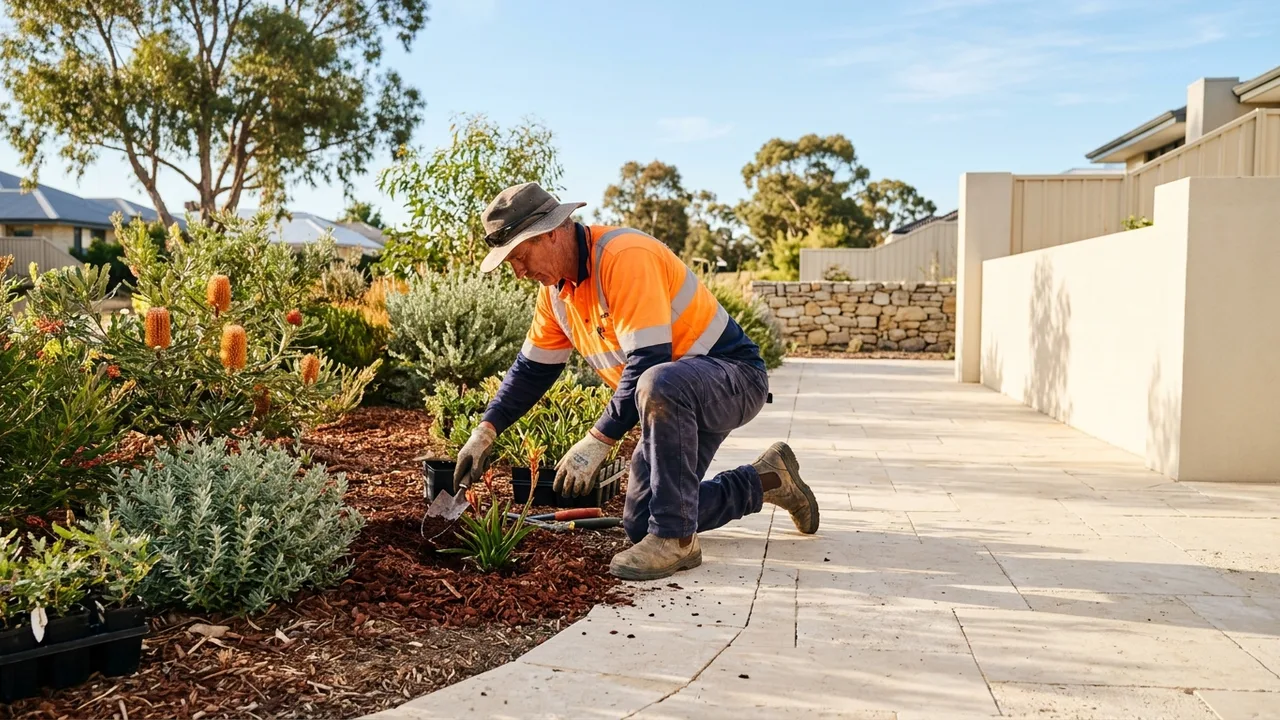
Waterwise Landscaping Perth for Native Gardens
Patchy lawn, beds the retic never reaches and a new build still on bare sand all point to the same fix. Waterwise landscaping in Perth sorts the soil and the watering so the yard survives summer on two days a week.
Most of the work happens below the surface: better soil, the right plants in the right spots, and retic zoned so every bed gets its share on your two watering days. A local landscaper designs and builds it as one job.
What is included
- Hardy natives that cope with heat Banksias, grevilleas and kangaroo paws handle dry spells once their roots are down, so you are not dragging a hose around in February.
- Drip lines under mulch Water lands at the roots instead of on the path or the fence, which matters when you only get two watering days.
- Mulch and bed edging Mulch shades the sand and keeps weeds down, and edging stops it spilling onto paving.
- Lawn only where it earns its place Turf stays where children and pets play, and unused strips become planted beds.
How it works
-
Walk the block
The landscaper notes the sun, the wind, the slope and what already grows, including any hot western wall, then talks through how you want to use the space.
-
Plan and price in writing
You get a planting layout, retic zones mapped by water need and a written price before any digging begins.
-
Prepare the ground
The surface is levelled and the sand is made ready to take water instead of shedding it.
-
Install retic and plant
Drip zones go in under mulch with run times set for your two watering days, then the plants follow.
-
Settle the garden in
New natives get extra water through their first summer or two, then the timer is eased back once fresh growth shows.
Waterwise landscaping in Perth: what a garden that copes with summer looks like
A waterwise garden is not a gravel yard. It is a planted garden where the plants suit the climate, the soil has been improved and the watering is set up deliberately.
In Perth that usually means banksias, grevilleas, kangaroo paws, coastal rosemary and tough groundcovers sitting alongside a few feature plants. Native plants evolved on poor, sandy ground, so they do not need rich soil or heavy feeding. What they need is a good start and sensible watering while their roots settle.
The design, the soil work and the retic depend on each other. The planting plan decides where the zones fall, the soil work decides how well each bed holds water, and the retic is timed to suit both.
Earthworks and ground preparation: getting Perth sand ready to hold water
Perth's sandy Swan Coastal Plain soil drains quickly and holds very little water or nutrition. Left alone, it can also turn water repellent, where water beads on the surface and runs off instead of soaking in.
The fix starts before planting. Compost or other organic matter is worked into the top layer, a wetting agent helps water penetrate, and the surface is levelled so rain and retic do not run away. On a sloping block, small retaining steps or shaped beds stop the sand washing onto paths.
Planting and grouping by water need
Grouping plants by water need is the single biggest saving in a waterwise garden. Thirsty plants go together near the house or a shaded seating area. Tough, dry-loving natives go in the exposed, hot spots.
Each group then gets its own retic zone. That means a hardy grevillea is not drowned just because a fern next to it needs a drink, and a fern is not starved to suit the grevillea.
Placement matters too. Western and northern walls reflect heat, so a plant that suits full sun elsewhere may scorch there.
Retic and the two-day watering roster
Retic, short for reticulation, is the underground pipe and sprinkler or drip system that waters the garden automatically. On a two-day a week roster, every zone has to get enough on those two days to carry plants through the rest of the week.
Drip lines under mulch suit garden beds because they put water at the roots with little lost to wind and evaporation. Sprinklers suit lawn. Timing runs early in the morning, and each zone gets a longer, deeper soak rather than a short daily sprinkle, which pushes roots down.
If your retic misses half the garden, the usual causes are blocked or broken heads, poorly placed sprinklers or zones that were never designed for the current planting. A landscaper confirms the cause on site.
What a waterwise garden costs in Perth
Cost depends mostly on area, how much soil work the sand needs and how much retic is involved. These Perth ranges are as at October 2026:
| Item | Typical range |
|---|---|
| Small garden design | $500 to $1,500 |
| Garden bed establishment | $40 to $80 per m² |
| Soft landscaping (turf, beds, mulch, plants) | $45 to $90 per m² |
| New standard 3 to 5 station retic system | $1,500 to $3,000 |
Most jobs combine only some of these lines. A front yard turned from patchy lawn into native beds usually means a design, bed establishment and a retic rework rather than a whole new system. Turf supplied and laid, including preparation, runs $18 to $35 per m², so the lawn you keep is worth sizing on purpose. A written quote sets out exactly what the price covers before work starts.
Landscape mistakes that cost you plants
The costliest mistake is planting before the soil is ready. The second is putting plants with different water needs on one zone. Both leave dead patches that look like bad luck but are really design faults.
Other errors include skipping mulch, planting in the middle of summer and choosing plants for flowers without checking their size at maturity. A native that grows into a large shrub in the wrong spot ends up pruned hard or pulled out.
Start with your block
A rezoned retic and two new beds can change a front yard without touching the backyard, so the job can be as small or as big as your block needs. In your message, put the size of the yard, which way it faces, what is there now and how you want to use it in summer.
Waterwise and native gardens options
- Front yard native makeover Patchy lawn is replaced with shaped, planted beds, and the retic is reworked so it reaches every one of them.
- New build backyard start Bare sand is improved, zoned for watering and planted, so a blank block becomes a yard you can sit in during summer.
Waterwise and native gardens across Perth
Frequently Asked Questions
How much should a low-maintenance native garden cost in Perth?
How do I establish a native garden on a new build in Perth?
What landscaping mistakes should I avoid with a waterwise garden?
Get it priced
Yard baking in the heat or sitting unused? Tell us what you want and get a clear price to work from.
Tell us what you need done and we'll send you a price.