
Lawn Installation in Perth, WA: Landscaping That Starts With the Sand
A new lawn only lasts if the sand under it is ready for it, and a local landscaper can put the price in writing.
If your new build backyard is bare sand, or your old lawn has gone patchy where the retic misses, lawn installation in Perth starts below the grass. Turf laid on loose, uneven or compacted ground thins out, however often you water it. A local landscaper checks where the retic actually reaches and where the sand is compacted before any digging begins.
What is included
- Builder's rubble removal New build sand often has offcuts and rubble mixed through it, and clearing them out stops them blocking roots later.
- Breaking up the base under synthetic turf The compacted base left by artificial lawn is loosened so real grass can root down instead of sitting on a hard layer.
- Relaying retic to reach every corner Sprinklers are moved or added so the whole lawn is watered inside the roster days, which stops the dry corners that cause thin spots.
- Tight joins that hold the sand Close-butted rolls stop sand washing out of the seams, and a firm finish along paths slows the edges drying out in the first weeks.
How it works
-
Look at the yard
The landscaper reads the sun and shade, the fall of the ground, the soil and any existing retic or old lawn.
-
Written scope and price
You see what is included and what it costs before anyone starts digging.
-
Clear and level
Old grass, weeds or synthetic turf come out, and the ground is cut back to its final height.
-
Prepare the soil
Sand is improved and firmed so the turf roots into it and holds moisture between watering days.
-
Lay the turf
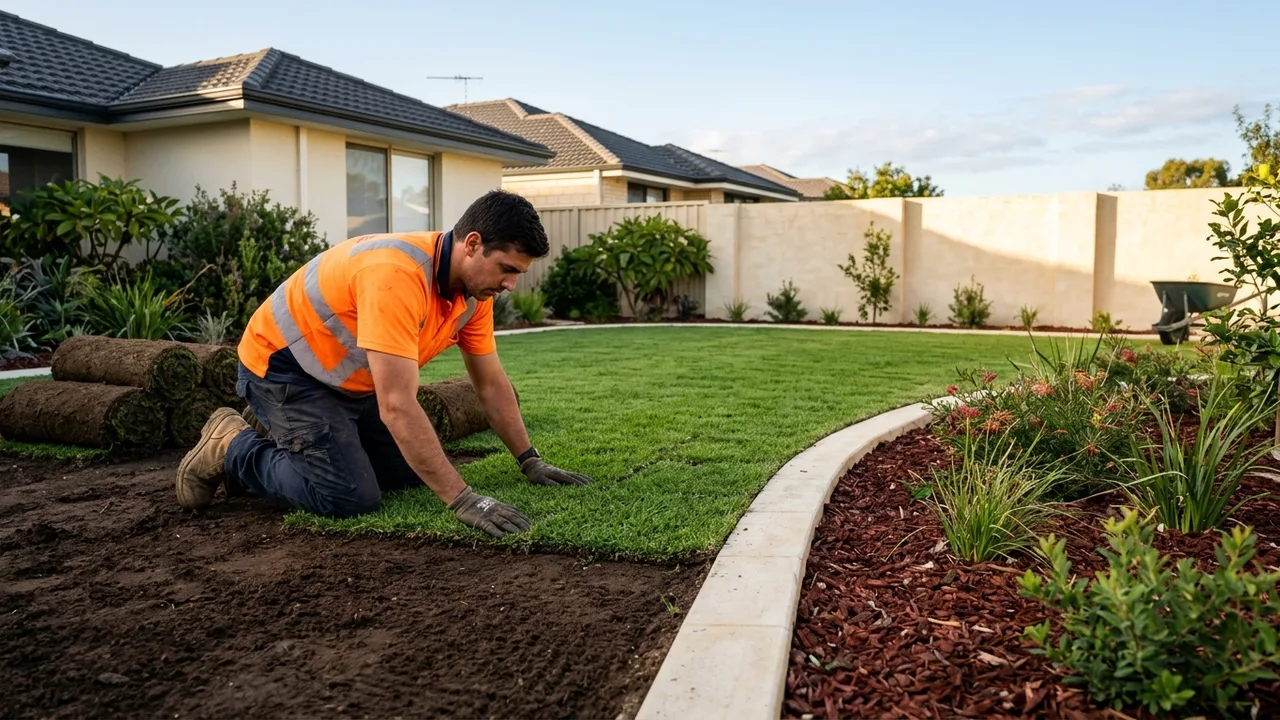
Rolls go down tight, edges are trimmed to paths and garden beds, and the lawn is watered in.
-
Settling in
You get plain advice on watering, first mow and when the lawn can take foot traffic.
Lawn installation in Perth: why lawns thin and what fixes them
A lawn that will not stay thick and green is rarely a grass problem alone. Perth sand drains fast and holds few nutrients, so turf laid straight onto it dries out and starves. Add a retic head that misses a corner, or a tree that shades one side, and the weak spots appear in the same places every year.
A lasting fix deals with the cause first. That might mean levelling, improving the sand, moving a sprinkler or choosing a grass that copes with shade. New turf on top of an unsolved problem simply thins again.
Earthworks and ground preparation for a lawn on sandy soil
Good turf starts with the surface under it. The landscaper clears old grass and weeds, levels the ground so water does not collect in dips or race off high spots, and works the sand so roots can get down.
On a new build, the yard is often bare sand with builder's rubble mixed through it. On a sloping block, sand can wash onto paths until the ground is shaped properly. Skipping this stage is the usual reason a new lawn looks fine for a month and patchy by the next summer.
If you prefer to prepare the soil yourself, a landscaper can still lay the turf. What matters is a level, firm and even surface with the sand worked to a consistent depth, so the two of you need to agree who does which part.
Choosing a grass for sun, shade and foot traffic
The choice often comes down to buffalo or kikuyu. A buffalo such as Sir Walter copes with part shade and sends out few runners, so it stays out of garden beds. Kikuyu takes hard wear and recovers fast, but it creeps into beds and cracks unless the edging is firm.
A lawn that the kids and the dog run across every day suits kikuyu. A shaded corner under a tree suits buffalo.
Say where the sun falls, how often the lawn gets walked on and how much mowing you want to do. That decides the grass far better than a name on a roll.
Why new turf burns off along fences in a Perth summer
New turf is at its most fragile in its first weeks. Easterly winds and extreme summer heat dry out the edges first, which is why thin strips often show along fences and paths.
Watering has to fit the two-day roster as well. A good installer plans retic so it covers the whole lawn within those watering days, and explains how to water a fresh lawn so roots chase moisture down instead of staying near the surface.
Replacing artificial turf or an old lawn with real grass
Synthetic turf can be lifted and replaced with living lawn. The base underneath is usually compacted rock or sand sold for drainage, so it is broken up and reworked before turf goes down. Old lawn that has gone to weeds or bare patches is stripped in the same way.
The landscaper laying the turf can also plan the sprinklers, which suits a yard where the old retic never reached the whole garden.
Keeping the lawn thick once the turf is down
A new lawn needs regular watering, a first mow at the right height and feeding that suits sandy soil. Sand lets nutrients wash through quickly, so light feeding at steady intervals works better than one heavy dose. Through a summer heatwave, set the mower higher, because cutting short stresses the grass and uneven watering brings the thin spots back.
If the lawn has been neglected, a landscaper can often rescue it with aeration, feeding and patching before a full replacement is needed. The inspection on site decides which job you actually have.
What drives the cost of a new lawn
In a Perth yard, the price follows the size of the lawn, how much clearing and levelling the ground needs, the grass type and whether retic goes in. Access matters too. Turf rolls are heavy, so a long carry from the street to the lawn area adds labour, and a clear path keeps paving and beds from being damaged on the way through.
A higher quote often includes proper preparation, while a cheaper one may lay turf on the sand as it is. A written scope that covers soil improvement should say how deep the sand is worked and what is added to it, so the totals can be weighed fairly.
Lawn installation and care options
- Levelling and sand improvement On a sloping block, the fall is shaped so sprinkler water soaks in rather than running onto the path.
- Edging that holds A firm edge stops runner grasses creeping into the garden beds and keeps gaps from opening where sand could wash out.
Lawn installation and care across Perth
Frequently Asked Questions
How long does it take to put in a new lawn?
How long until a new lawn can take foot traffic?
Why does my lawn keep thinning in the same spot?
Get it priced
Yard baking in the heat or sitting unused? Tell us what you want and get a clear price to work from.
Tell us what you need done and we'll send you a price.