
Landscape Gardeners in Perth WA: Who Does Your Landscaping
Bare sand at a new build, a lawn that browns off by January, a sloping block that sheds sand onto the path: these are the yards landscape gardeners in Perth WA are called to. If one of those sounds like yours, here is who does the work and what good landscaping looks like.
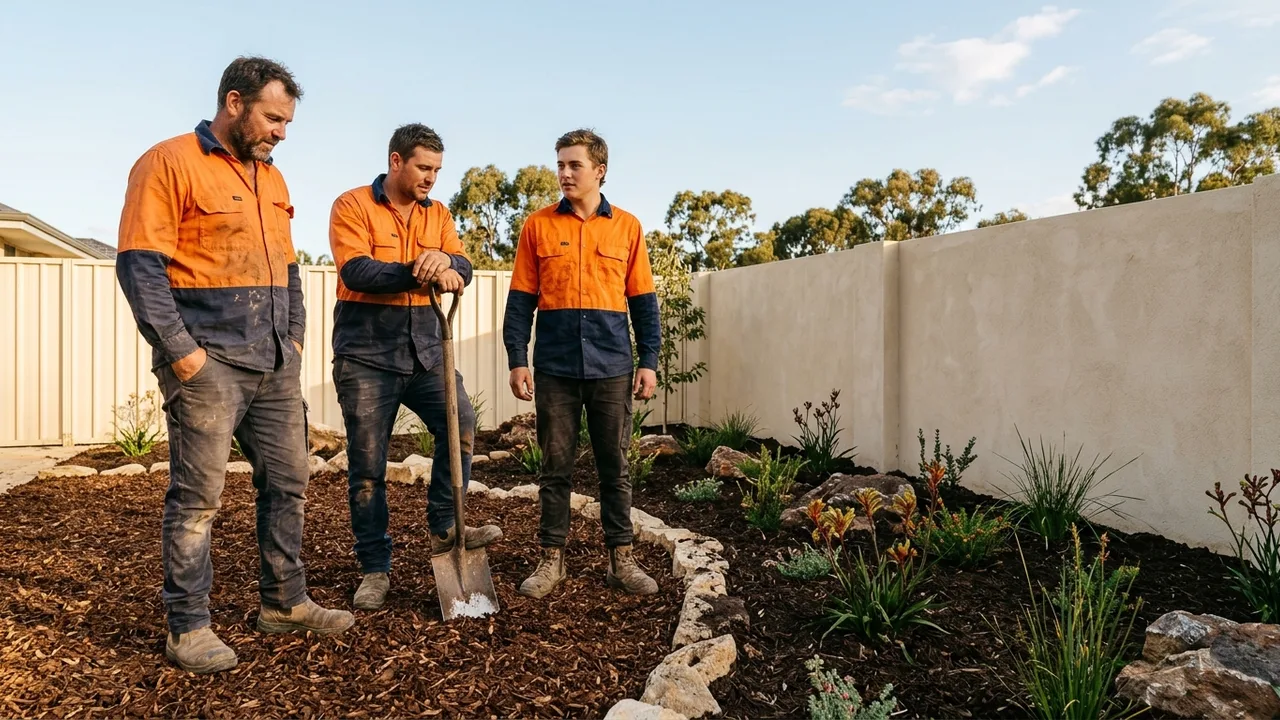
Landscape gardeners in Perth WA: who works on your yard
Building a limestone retaining wall takes different skills and ground preparation than laying a new lawn or fixing a broken retic line (the buried watering system). The best result comes from a crew that handles the job in front of it regularly.
Perth's sandy soil drains fast and holds few nutrients, so most beds and lawns need the ground improved before anything goes in. Easterly summer heat scorches new plantings, and the two-day watering roster limits how often a lawn can be soaked. That shapes what a crew plants, how it sets up retic and how it prepares the ground.
New turf and plants need steady water while their roots settle. Retic that reaches the whole garden is worth getting right at the start, because it gives a new garden its best chance of establishing.
Do landscaping jobs in Perth WA need a licence?
WA has no general trade licence for gardeners or landscapers, though anyone paid to apply herbicide to weeds needs a pesticide licence. For most of the work, a licence number is not the way to judge a crew.
Past work, a clearly explained job and a written price say more about a landscaper than a licence number would.
Structural work is different. A retaining wall or deck may need a building permit, and your local council, as the permit authority, settles that before work starts. That decision is not the landscaper's to make.
Anything wired into the house power or connected to the mains water is work for a licensed electrician or plumber. A good landscaper brings those people in rather than guessing.
What insurance cover and safe work practices should a crew have?
A current public liability certificate is the insurance cover that responds if the work damages a neighbour's fence, a pipe or a car in the driveway. Anyone bringing an excavator onto your block should be able to show one.
Safe work is the other half. WHS compliance, short for work health and safety, shows in how a crew handles open trenches, heavy limestone blocks and digging near buried pipes and cables.
A yard job puts people and machines on your property for days, so an unsafe site can injure someone. The way a crew leaves the site counts too. Open trenches, loose material and stacked pavers need dealing with at the end of each day, especially with children or pets about.
Can one crew do both the design and the build?
Often, yes. For most backyards it is the smoother way, because the plan is tested against your actual soil and slope from the start, which means fewer changes once digging begins.
A lawn the retic keeps missing and pavers lifting near a big tree are both level and drainage problems. That is why design and build work best tested against the same ground, with the levels and drainage right before any paving or planting goes in.
If you want lighting or an outdoor kitchen later, plan the conduit and levels now so you are not digging up new paving to add them.
What does the price cover and how long is the yard a building site?
The written price sets out what is being built or planted and what each part costs. You have it before any work starts, so the job runs to an agreed scope.
One quote may sit well above another because the scope differs. Ground preparation, the depth of the limestone footings, the grade of paving, the retic design and the plants chosen can all change the number. Footing depth and paving base are where a cheap quote usually saves money, and where a yard shows it later.
Length of disruption depends on the job. A garden tidy is a short visit, while earthworks, walls and paving take longer. A crew can talk through the stages with you so you know which parts of the yard are out of action and when.
Why the paving base belongs in the written price
Pavers last or lift depending on what sits under them. A well-compacted base, laid to the right fall, keeps water moving away and stops pavers sinking beside a tree or a downpipe.
A written price that names the base depth and the material lets you see what you are paying for, rather than just a price per square metre of surface.
Get a price to work from for your yard
If your yard is baking in the heat or sitting unused, say what you want from it. Type your suburb, what is there now, how the ground falls and what you would like to do on summer evenings.
A garden that has got away from you, a patch of bare sand or a tired front yard each lead to a different plan. Request a Project Review and put your yard into your own words.