
Synthetic Turf in Perth, WA: Low-Water Landscaping for Sand and Heat
Synthetic turf in Perth suits yards where real lawn keeps losing to sand, heat and the watering roster. Laid on a proper base, it stays green and flat without a mower.
Turf makes sense when your lawn has gone patchy, the reticulation (the buried sprinkler system) misses half the grass, or nobody uses the yard because of the upkeep. Artificial grass needs no mowing and no watering. It only lasts when it sits on a well-built base, so the groundwork matters more than the turf you choose.
What is included
- Removing the old surface Dead lawn, weeds and roots left in the ground rot over time and leave soft spots under the turf.
- Levelling and falls A gentle slope lets rain run off, so the finished surface has no dips or ponding.
- Compacted base layer A firm, free-draining layer stops the turf sinking and keeps puddles from sitting under it.
- Edging and borders Turf fixed to paving, timber or concrete edges cannot lift, curl or creep into garden beds.
- Joins, fixing and infill Neat seams, secure fixing and a brushed-in infill (fine sand or similar) keep the blades upright and the surface stable.
How it works
-
Look at the yard
The landscaper notes the size, the shade, how the ground falls and who will use the space, then tells you if turf suits it.
-
Written scope and price
You see what is included, from the base to the edging, in writing before anyone starts digging.
-
Dig out and build the base
The old surface comes out, the ground is levelled and the base is laid and compacted in layers.
-
Lay, join and finish
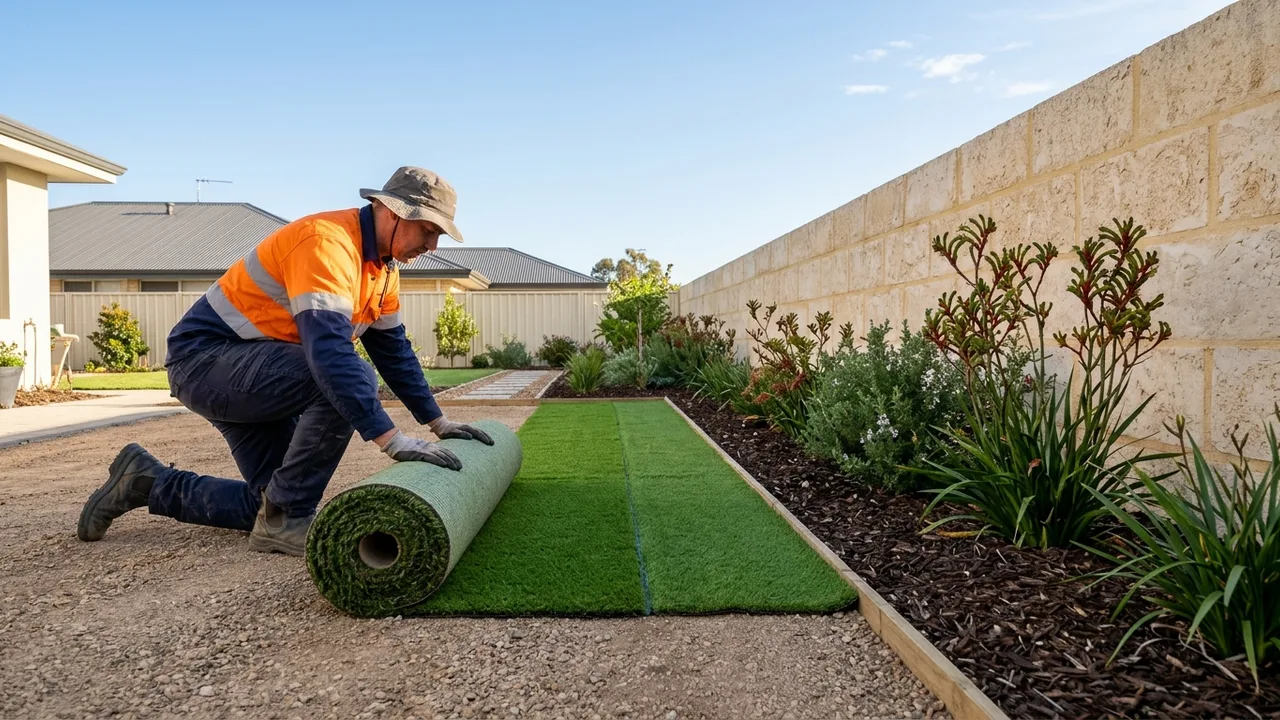
The turf is rolled out, cut to the edges, joined, fixed and brushed so it looks even from the first day.
Synthetic turf in Perth: is artificial grass worth it?
For many yards, yes. If the lawn fights you every summer, turf gives you a green surface all year, including through the hottest months when real lawn browns off.
It works best where grass struggles anyway: under big trees, along shaded side paths, on small courtyards and on frontages that get no love. Perth's sandy soil drains fast, so real lawn needs steady feeding and watering, and the two-day watering roster limits how much help it gets in a hot spell.
Turf is not always the answer. A large, open lawn where the kids run barefoot all day may suit real grass better, and plants cool a yard in ways plastic cannot. A good landscaper will say so plainly. Often the best result is turf in the high-use area and planting around it.
Earthworks and ground preparation decide how turf lasts
Most failed turf jobs fail underneath. Turf laid straight over old lawn or loose sand sinks, ripples and holds water, and no amount of brushing will fix that afterwards.
A proper base starts with removing the old surface, then shaping the ground so water has somewhere to go. Crushed rock or a similar material is spread and compacted in layers until it is firm underfoot. A thin bedding layer goes on top so the turf sits flat.
On a sloping block, the base also controls where water and sand end up. If sand keeps washing onto your path, the landscaper looks at the fall of the ground and the edging before laying anything, because turf cannot hold back a moving slope on its own.
Heat, pets and kids on artificial grass
Artificial grass copes with traffic well, but it does get hot. On a hot afternoon, turf in full sun can be uncomfortable on bare feet and paws. Shade from a pergola, a tree or a shade sail makes a big difference, and so does placing turf where it gets some shelter.
For kids, a level base with no dips gives a safe, even surface for play. For pets, drainage is the main issue. Urine passes through the turf, so the base needs to let it drain, and the area benefits from an occasional rinse with a hose.
Turf choice matters too. A denser pile with a firm backing handles heavy use and keeps its shape, while a cheaper, thinner product can flatten sooner. The landscaper can talk you through the options for your household.
What drives the cost of an artificial lawn
Size is the obvious factor, but the base and the site usually matter more. A flat, open yard with easy access is quicker to prepare than a tight courtyard where everything is carried through the house.
The other drivers are how much old surface has to come out, how much levelling the ground needs, the quality of the turf and the amount of edging. A sloping block that needs a retaining wall adds a separate job, and any wall or structure that needs approval is sorted before building starts.
When two quotes sit far apart, the gap is often the base. A low price can mean a thin layer of material, no edging or a quick lay over the old lawn. A clear written price tells you exactly what you are paying for.
Turf, real lawn, paving or planting?
Real lawn is cheapest to lay and cools the yard, but it needs mowing, feeding and water. Paving lasts a long time and suits seating areas, though it holds heat and gives no green. Mulched native planting uses little water once established but is not a play surface.
Turf sits between them. It takes the work out of a surface you want to walk on, and it pairs well with limestone walls, paved seating and garden beds.
The maintenance is light rather than none. Leaves and dust need sweeping or blowing off, and the surface occasionally needs a rinse and a brush to keep the pile upright. Weeds can still appear at the edges, so good edging pays off for years.
Synthetic turf options
- Front yard turf A tidy green frontage for a house that needs to look good without weekly mowing, including a quick lift before a sale.
- Backyard play areas A soft, even surface for kids and ball games on ground that used to be bare sand or worn grass.
- Pet-friendly turf areas Turf laid with drainage in mind so a dog run or toilet patch can be rinsed and stays fresh.
- Turf with paving and garden beds Turf combined with paved seating, limestone edges or planted beds so the whole yard works as one space.
Synthetic turf across Perth
Frequently Asked Questions
How long does a turf job take?
Should my turf come with a warranty?
Can I do a small front yard in turf on a tight budget?
Get it priced
Yard baking in the heat or sitting unused? Tell us what you want and get a clear price to work from.
Tell us what you need done and we'll send you a price.